Gamjatang: The Secretly Overpowered “Hidden Boss” of Korean Comfort Food
Let me introduce you to the ultimate Himsumjjin (힘숨찐) of the culinary world. In Korean internet slang, Himsumjjin refers to a character who looks completely ordinary, perhaps even a bit rugged or unpolished, but secretly hides an overwhelming, god-tier power. In the vibrant and highly competitive arena of Korean cuisine, that title belongs exclusively to Gamjatang (Spicy Pork Bone Stew).
At first glance, Gamjatang doesn’t possess the elegant, colorful plating of Bibimbap, nor does it have the sizzling, premium glamour of Korean BBQ. It usually arrives at your table looking like a chaotic, intimidating mountain of jagged pork spine bones, wilting greens, and wild perilla leaves, all swimming in a bubbling, deeply red broth inside a battered iron pot. It looks rough. It looks cheap. But make no mistake: one spoonful of this rich, spicy, soul-reviving soup, and you will instantly realize you are facing the final boss of Korean comfort food.
Here is everything you need to know about this secretly overpowered dish, from the hilarious misconceptions about its name to the best spots in Seoul to experience its undeniable magic.

The Great Misconception: Why is it called “Gamjatang”?
For anyone studying the Korean language, the name of this dish is a massive trap. “Gamja” (감자) translates directly to “potato,” and “Tang” (탕) means “stew.” Naturally, foreigners and even many young Koreans assume they are ordering a potato stew.
However, when the giant pot arrives, you have to dig past a mountain of meat, bones, and vegetables just to find maybe two or three sad, lonely potato halves sitting at the bottom. So, why is the potato claiming the title of the dish when the pork bone is doing all the heavy lifting?
This brings us to the great Gamjatang debate:
- The Anatomy Theory: Many butchers and chefs claim that the specific part of the pork spine used in the stew, or the yellow spinal cord hidden inside the bone, is historically called the gamja-ppyeo (potato bone). Therefore, it’s a “pork spine stew,” not a “potato stew.”
- The Peasant Theory: Others argue that back in the day, meat was a rare luxury. To stretch the meal and feed large families, farmers would bulk up a cheap pork bone broth with heavily abundant potatoes. Over time, as South Korea grew wealthier, the meat-to-potato ratio flipped, but the original name stuck.
Whichever theory you believe, the truth remains: you are not here for the potatoes. You are here for the impossibly tender, fall-off-the-bone pork.
When Do Koreans Actually Eat Gamjatang?
Gamjatang is not typically a formal business lunch or a romantic first-date meal (unless you want your date to see you sucking marrow out of a pig’s spine on day one). It thrives in specific, highly atmospheric scenarios:
- The Ultimate Hangover Cure (Haejang): South Korea has an intense drinking culture, and Gamjatang is the holy grail of haejangguk (hangover-chasing soup). The spicy, rich broth cuts through the alcohol, while the heavy protein repairs your broken body.
- The 3:00 AM Late-Night Feast: Many legendary Gamjatang restaurants operate 24/7. When the clubs close or the night-shift workers clock out, these glowing neon havens are packed with people seeking a hearty, cheap, and deeply satisfying midnight meal.
- Rainy Day Comfort: When the monsoon season hits and the weather is gloomy, Koreans crave hot, bubbling, spicy soups. Gamjatang, paired with a chilled bottle of Soju, is the absolute perfect rainy-day ritual.
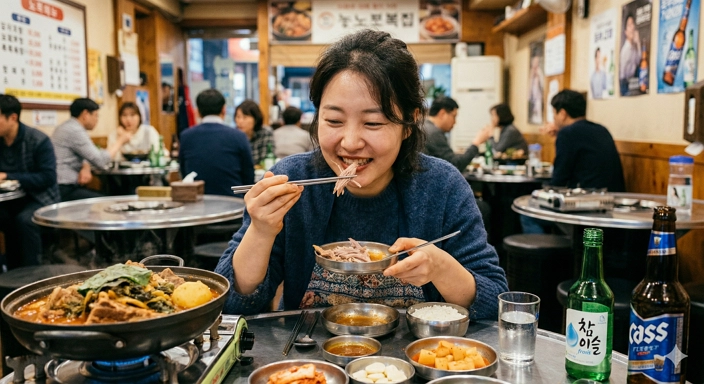
How to Eat Gamjatang Like a Pro
Eating Gamjatang is not a passive experience; it is a full-contact sport. You cannot be shy. To unlock the true power of this Himsumjjin dish, you must follow the ritual:
- Step 1: The Broth Check. Before doing anything, take a spoon and taste the broth. Let the earthy, nutty flavor of the deulkkae (perilla seed powder) and the deep spice wash over you.
- Step 2: Dismantle the Mountain. Use your tongs to transfer a massive spine bone to your personal plate.
- Step 3: Chopsticks First, Hands Later. Use your chopsticks to pick off the ultra-tender meat on the outside. Dip the meat into the provided sweet-and-sour mustard soy sauce (this acidic dip perfectly balances the heavy pork fat). When chopsticks fail, abandon your pride, pick up the bone with your hands, and suck the incredibly flavorful meat and marrow from the crevices.
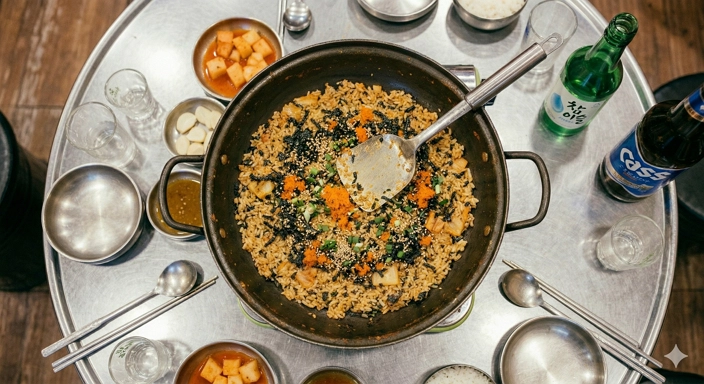
- Step 4: The Final Boss (Bokkeumbap). Do not—under any circumstances—drink all the soup. When you are mostly finished, you must call the waiter and shout, “Bokkeumbap juseyo!” (Fried rice, please!). They will take the remaining concentrated, fat-infused broth, add rice, seaweed, sesame oil, and kimchi, and fry it flat against the pot until the bottom gets incredibly crispy. This scraping-the-pot experience is the true climax of the meal.
Best Gamjatang Restaurants in Seoul for Foreigners
If you are ready to face the boss, here are some highly recommended spots that are incredibly welcoming to foreigners, yet boast a legendary reputation among locals:
1. Somunnan Seongsu Gamjatang (소문난 성수 감자탕)
- Vibe: The undisputed heavyweight champion of the trendy Seongsu neighborhood. It has been featured on numerous food shows, including those hosted by Korean culinary icon Baek Jong-won.
- Why it’s great: The meat here is famously tender, and the broth is robust but very clean. They serve a special dipping sauce with diced green chilies and onions that elevates the pork to another level. Expect a queue, but it moves fast.
Go to GoogleMap Somunnan Seongsu Gamjatang
2. Halmaejip (할매집) – Gyeongbokgung Area
- Vibe: A Michelin Bib Gourmand recipient hiding in a narrow alleyway near the royal palace.
- Why it’s great: This place has a unique twist. Instead of the usual heavy perilla-seed base, their broth is heavily spiked with garlic and generous amounts of spicy chili powder. It’s a fiery, garlicky, unforgettable variation that leans heavily into traditional Korean spice profiles.
3. Ilmi Jip (일미집) – Huam-dong
- Vibe: A 50-year-old establishment with a delightfully retro, unpretentious atmosphere.
- Why it’s great: Unlike modern spots that pile on perilla powder and cabbage, Ilmi Jip is famous for its “clear” Gamjatang. The broth is lighter, deeply savory, and focuses entirely on the pure, high-quality taste of the pork bone itself. It’s perfect for beginners who might find standard Gamjatang too heavy.
Gamjatang doesn’t need flashy marketing or delicate plating. Its power lies entirely in its substance. The next time you are in Korea, look for the bubbling iron pot, roll up your sleeves, and prepare to be amazed by the hidden badass of Korean cuisine.

![Myeongdong Ramen Library? Inside emart24’s Massive K-Food Lab [2026 Ultimate Guide]](https://bigdorazi.kr/wp-content/uploads/2026/03/art_17736135581731_65f948.jpg)